Sunday, April 24, 2016

Batten Down!

Batten Down!

Summarize my final thoughts? It’s going to be harder than it sounds because I’ve learned so much & have so many bits of ideas floating around in my mind.

Inquiry-Based Learning . . . 
  • IBL isn’t a well-intentioned but misguided attempt to let the students learn what, when, where, & how they want to learn. It’s a highly structured teaching strategy that capitalizes on student backgrounds, interests, & prior learning. 
  • IBL requires a lot of thoughtful, prior planning by the teacher who wishes to use it well. 
  • A rich sense of the classroom as a community is absolutely necessary. 
  • Students may need to be taught how to “do” inquiry & to develop the requisite skills for authentic inquiry. 
  • IBL includes a wide range of practical strategies from teacher-centered & highly structured lessons, to more open-ended, student-centered investigations. 
  • Teacher’s need to begin with the end in mind with clearly articulated curricular goals, which are pursued as they help students to develop the skills, abilities, & understandings for authentic inquiry. 
  • Some questions are better than others. Students need to pursue investigable questions whose answers can be discovered because they’re based in discoverable facts, not overarching, theoretical concepts / constructs. 
  • Facts are discoverable, not merely empirical. 
  • Web 2.0 offers a vast array of resources to assist both teacher & student in the process of inquiry. 
  • Web 2.0 tools need to be chosen with care & with an eye on the inquiry’s goals. They need to be well-integrated within the lesson so as to be of genuine help to the inquiry. 
  • The lesson plan is both spring board & landing pit. Lessons need be designed backwards to accomplish learning goals. 
  • Formative assessment is necessary during all phases of the inquiry. 
  • Summative assessment is should be done with the process, not only the content, in mind. 
  • Rubrics should provide a clearly articulated structure for student assessment.
 And, there’s more that I need to review & to practice as I find how to include IBL in my classroom.

At the end of this semester, I will have presented a new course in the history, character, development, & ongoing relevance of Dominican Spirituality. It’s a required course in the senior theology curriculum. The question that I have as we end the year concerns how I might dip a toe into IBL with the time remaining in the semester. There’s not much time left! Just this weekend we began our “end of year events” with Hall of Fame inductions, the scholarship dinner gala, and the Mother-Senior mass & brunch. And, AP’s are just around the corner. So, I might shift the focus to my junior level final projects.

Since I’m not teaching summer school this year I’ll have time to take stock of the senior level course. I’ll be introducing the new curriculum to two colleagues who haven’t taught the course before, but who are on-deck for it come fall. So, I’ll share with them some of what I’ve learned in the course to see if we can develop one of two lessons that are decidedly IBL lessons for the new school year. And, then continue to build from there.


So, it’s time to batten down the hatches. First, to weather the end of this year! Second, to get ready for next!

Delightful Things

In the discussion post about the 5BSCS 5E Instructional Model I wrote that it serves, “to help teachers create a coherent instructional strategy, which will help students develop a progressive, comprehensive understanding of the course content.” Thinking a bit later & at a remove, I would say the same thing about Inquiry-Based Learning.

The 5E model is the most straightforward way to plan a class. Let me add a few caveats. It’s the most straightforward for the way that I think & for the way that I teach. I’m a “big picture” thinker & I find that the 5E helps me to bring the big picture into much sharper focus much more quickly than ones that follow the method & manner of Hunter. Don’t get me wrong, I’ve used Hunter to great result, but it seems to me that the 5E lesson plan offers a bit more of an intuitive approach.

Now, intuitive may not be the word that one immediately thinks of in conversations about IBL. After all, isn’t IBL supposed to be a teaching strategy for the sciences, for physics & maths & whatnot?

What I’m beginning to learn is that the strategy can be used in the humanities to as great an effect as in the sciences. It takes some effort --- especially for newhorns like me --- particularly when crafting investigable questions, but this all boils down to one thing (for me at least): a “fact” is not merely an empirical phenomenon. In reality, non-empirical facts make most people’s worlds go ‘round & ‘round every day. We live a huge part of our lives within a trove of non-empirical facts, like truth, & goodness, & beauty.


Now, I just have to commit to writing the questions, no, to writing good, investigable questions that help my students explore these delightful things.

Thursday, April 21, 2016

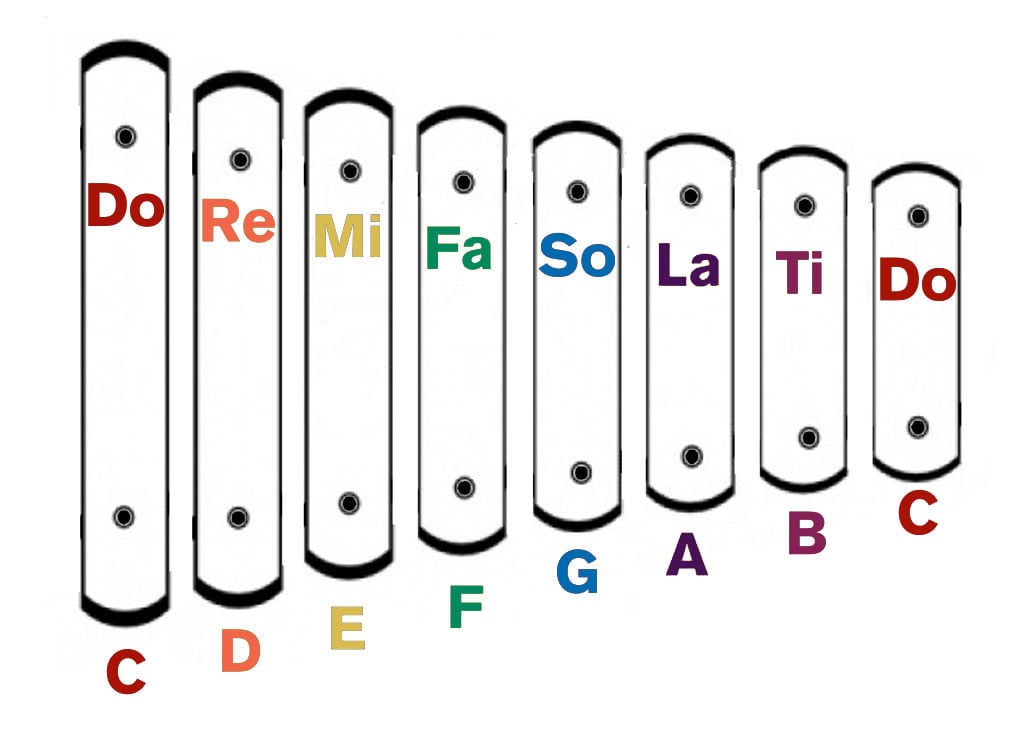
Do-Re-Mi

Julie Andrews’ character, the soon-to-be-former-religious-sister, Maria, uses this song to teach the notes of the major musical scale to the family Von Trapp in Rogers’ & Hammersteins’, The Sound of Music. It’s still used, even today, when teaching children to sing or to play an instrument. The beginning is a very good place to start.

I mention this because I’ve been thinking a lot about questions & how to form good questions for inquiry. And, it occurs to me that a successful inquiry must begin with a good question, or good set of good questions. The successful use of Inquiry-Based Learning (IBL) as a teaching strategy depends upon forming good questions, i.e., investigable questions, those that can be answered based upon discoverable facts. Note that I’ve used the word “discoverable” here rather than what you might expect in a discussion of IBL, i.e., “empirical.” IBL isn’t confined to the empirical, hard sciences, it can also be used in the softer humanities, which treat of questions of meaning, value, & possibility. The crux is, of course, the question.

Here are a few ideas that I’ve gleaned by trolling the internet using search terms such as “investigable,” “question,” & “humanities.” There were quite a few other terms & combinations, but you get the drift.

Students --- including those who fancy themselves teachers (& vice versa) --- need to hone critical thinking skills to a very sharp edge. We need to be able to see the logical connections between ideas; to evaluate an argument by the merit of its evidence & the consistency of its reasoning; to sort the salient from the merely accidental; to approach & solve problems systematically; &, to be self-critical in preliminary & final justification. Interpretation, analysis, inference, evaluation, explanation, & self-awareness, are among the skills a learner must have to be a successful learner, i.e., one who can profit from learning, who can “do” something with what has been learned.

In the humanities, it would seem that an investigable question is one that has a discoverable, factual --- though perhaps non-empirical ---, answer. So, the question,

“Is this an investigable question?” 

becomes for a student of the humanities something like,

“Is this something whose answer I can discover?”

Our conclusions may be arguable, but conclusions in all of the sciences are arguable until they have been established either as facts, or as more likely true than not.

The good question brackets learning at the beginning & at the end.


Friday, April 15, 2016

One Stem, Two Strategies

Horticulturists working in the United Kingdom have developed a remarkable plant that produces two vegetables on one stem. It’s called the "tomtato." The plant isn’t a true hybrid. The tomato is still a tomato, the potato is still a potato
(http://bbc.in/1mE2wJj). This isn't our grandparents' farm!


Before the course I had the suspicion that Inquiry-Based Learning (IBL) was just another variety of Project-Based Learning (PBL). It’s not. It’s the educational equivalent of the "tomtato." If the stem is student-centered instructional strategies, one stem holds IBL, another holds PBL. The former is process-driven; the latter, artifact driven.

I was also concerned about the types of institutional & curricular changes that would have to occur to use IBL with multiple sections of the same class. The changes, I find, don’t need to begin in the institution, or in the curriculum, the change needs to take place within me. What do I need to understand about the process of IBL so that I can begin to move from teacher-centered instruction to student-centered instruction?


Another question is to consider how to help my students develop the abilities needed for robust inquiry. How can I help students identify investigable questions, design investigations, choose proper tools & techniques, report evidence-based conclusions, & entertain alternative explanations.


Next, I’ll need to choose an inquiry strategy that addresses learning goals & student needs. Will the inquiry be structured with the teacher at or near the center of the process, looking over students’ shoulders, or having coffee in the lounge?
An early issue that remains for me concerns authentic assessment. What does it look like within IBL? How do you do it? How do students do it?

IBL certainly isn't what I feared it would be. It's the real thing! A tomtato!

Monday, March 14, 2016

Tell me more . . .


Here we go again! It’s been awhile since I took a course at Wilkes --- several months, in fact [the last one was with Dean Shareski in April 2015], so it’s taking me a while to get up to speed.  Still, I am excited to be taking another class, especially since this is my last course but one in the program.
The conversations my peers & I shared this week about Inquiry-Based Learning (IBL) helped focus the topic.  Many of us share the same questions & reactions.  At first, I considered IBL as just another flavor of Project Based Learning.  While I’m not able right now to discuss the finer points of how each differs, I do feel that I’m beginning to get the gestalt, if only in a non-thematic way.
One thing that I need to be aware of is not to let my disagreements with Dewey’s epistemology to completely color what he may have to teach me about classroom pedagogical techniques & strategies.  His is an instrumental view of truth --- if it works, it’s true --- which has taken our culture down Alice’s rabbit hole. We have yet to emerge.  But, that’s a discussion for another day.
There are several perhaps more immediate issues that I need to study if I’m to benefit fully from the course:
  • What types of institutional & curricular changes need to be made so that teachers can implement IBL for 150+ students in different sections of the course.
  • How do you overcome student resistance to IBL?  Students know how “to do school;” most prefer direct instruction because that’s all they’ve ever known &/or because they’re focused on the grade instead of on learning.
  • Is IBL appropriate for every learner in a college prep setting?
  • What does an authentic assessment look like in IBL?  Are quizzes, tests, essays, research papers, etc., completely verboten/
These are a few things that I need to settle so that I can fully appreciate the potential of IBL. So, it’s a good thing that we’re in the first week & there’s plenty more to come.