Julie Andrews’ character, the
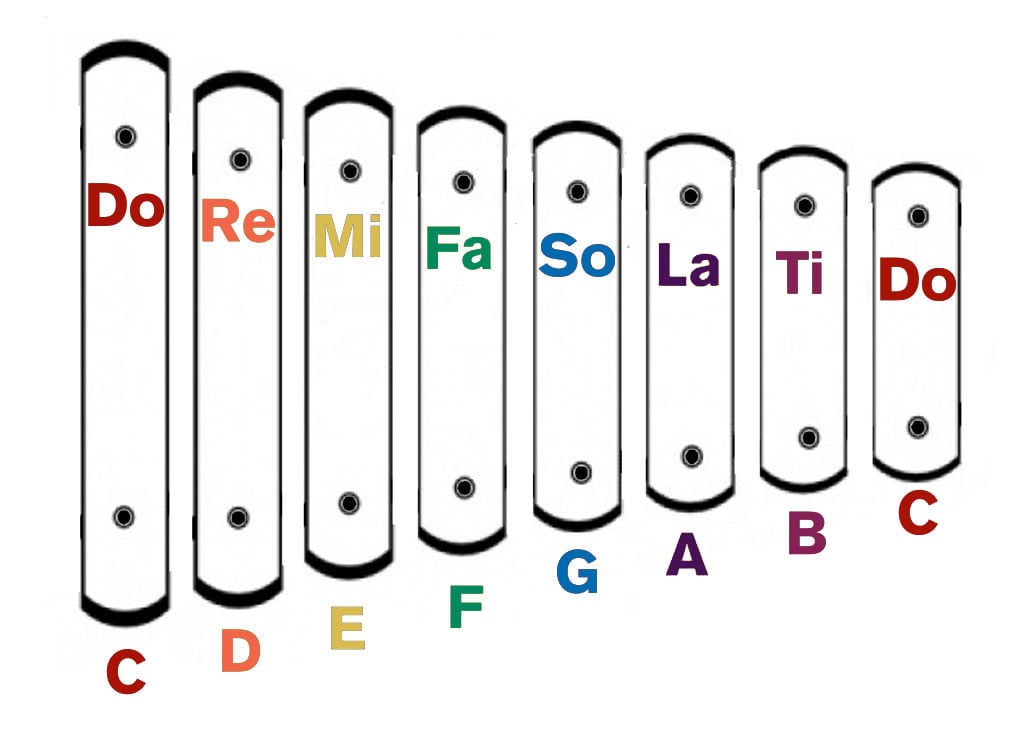
soon-to-be-former-religious-sister, Maria, uses this song to teach the notes of
the major musical scale to the family Von Trapp in Rogers’ & Hammersteins’,
The Sound of Music. It’s still used,
even today, when teaching children to sing or to play an instrument. The
beginning is a very good place to start.
I mention this because I’ve been thinking a lot about
questions & how to form good questions for inquiry. And, it occurs to me
that a successful inquiry must begin with a good question, or good set of good questions.
The successful use of Inquiry-Based Learning (IBL) as a teaching strategy
depends upon forming good questions, i.e., investigable questions, those that
can be answered based upon discoverable facts. Note that I’ve used the word “discoverable”
here rather than what you might expect in a discussion of IBL, i.e., “empirical.”
IBL isn’t confined to the empirical, hard sciences, it can also be used in the
softer humanities, which treat of questions of meaning, value, &
possibility. The crux is, of course, the question.
Here are a few ideas that I’ve gleaned by trolling the
internet using search terms such as “investigable,” “question,” & “humanities.”
There were quite a few other terms & combinations, but you get the drift.
Students --- including those who fancy themselves teachers (&
vice versa) --- need to hone critical thinking skills to a very sharp edge. We
need to be able to see the logical connections between ideas; to evaluate an
argument by the merit of its evidence & the consistency of its reasoning; to
sort the salient from the merely accidental; to approach & solve problems
systematically; &, to be self-critical in preliminary & final justification.
Interpretation, analysis, inference, evaluation, explanation, & self-awareness,
are among the skills a learner must have to be a successful learner, i.e., one
who can profit from learning, who can “do” something with what has been
learned.
In the humanities, it would seem that an investigable
question is one that has a discoverable, factual --- though perhaps non-empirical ---,
answer. So, the question,
“Is this an investigable question?”
becomes for a
student of the humanities something like,
“Is this something whose answer I can
discover?”
Our conclusions may be arguable, but conclusions in all of the
sciences are arguable until they have been established either as facts, or as
more likely true than not.

No comments:
Post a Comment